Madison Genthry
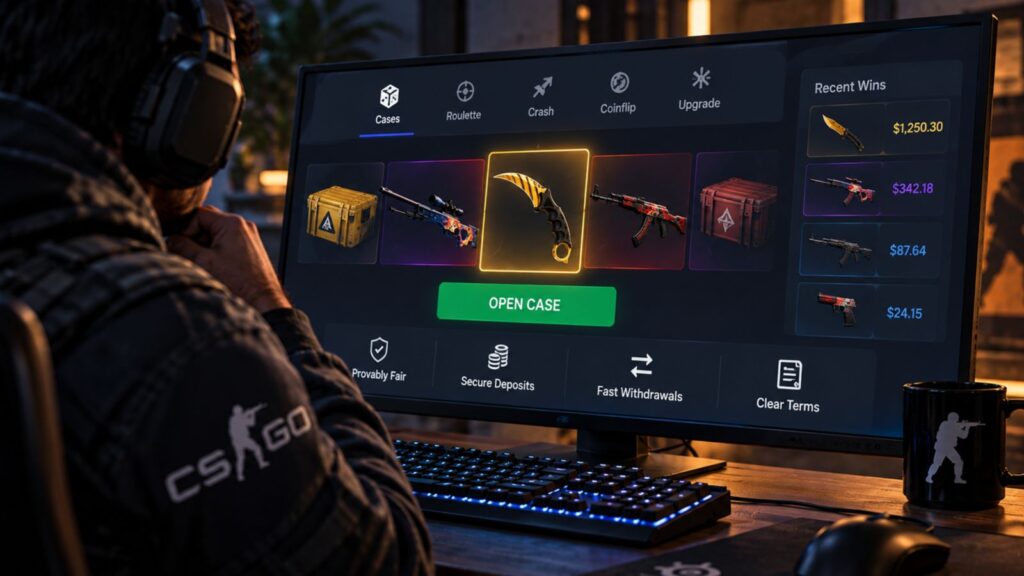
Third-party gambling platforms built around Counter-Strike skins operate separately from Counter-Strike 2 and Steam. Players researching gambling sites csgo should understand this distinction before depositing skins, cryptocurrency, or money. These platforms may offer case opening, roulette, crash, coinflip, case battles, and similar games, but their rules, payment systems, and security measures are controlled by the individual operator. Knowing how these systems work makes it easier to identify risks before putting valuable inventory or funds into an account.
How CS Gambling Platforms Handle Player Funds
The first step on most platforms is adding a balance. Depending on the site, this may involve depositing skins, cryptocurrency, or another supported payment method.
With skin-based deposits, the platform assigns a value to an item and converts it into site credit. This valuation does not necessarily match the Steam Community Market or an independent skin marketplace. A Field-Tested AK-47 skin, for example, may receive a different deposit valuation from its current external market price.
Players should therefore check the value offered before accepting a trade. It is also worth checking how the platform values items during withdrawals because deposit and withdrawal prices may differ.
Skin Trades Need Extra Attention
A legitimate-looking trade offer should still be inspected manually. Confirm the Steam account involved and every item included before accepting anything.
Never provide a Steam password, Steam Guard code, recovery information, or other sensitive credentials to someone claiming they need them to complete a trade. Players should also check the domain when signing in through Steam and avoid links sent by unknown accounts.
These precautions matter because CS2 inventories can contain knives, gloves, weapon skins, stickers, and other cosmetics with significant market value.
Common Games on CSGO Gambling Sites
Third-party platforms use several game formats. Roulette typically asks players to wager on one of several possible outcomes. Crash games involve a rising multiplier that can end at an unpredictable point. Coinflip generally places two sides against each other, while case battles compare the value of items generated from virtual cases.
Third-party case opening should not be confused with Valve’s official weapon case system. External platforms create their own cases, item pools, prices, and rules. A case displayed on a gambling site may use CS2 skins as potential rewards without functioning like a weapon case opened inside the game.
Understanding that difference is important when comparing costs and possible drops.
Provably Fair Systems and Game Verification
Many gambling platforms use the term “provably fair” for games based on randomized outcomes. In a typical implementation, cryptographic information such as server seeds, client seeds, hashes, and nonces is used to generate and later verify results.
The presence of a provably fair label alone is not enough. Players should check whether the platform explains its system and provides a practical verification method.
What Players Should Verify
After completing a round, a player should be able to access the relevant information needed to check the result. Some sites include an integrated verifier, while others provide instructions for independently reproducing the calculation.
Verification does not remove the house edge and does not make a wager profitable. Its purpose is narrower. It gives players a way to check whether the published result corresponds to the cryptographic data associated with the round.
If the process is poorly documented or cannot realistically be checked, the claim provides limited useful information.
Withdrawals Matter More Than Large Bonuses
Deposit promotions can attract attention, but withdrawal rules have a greater practical effect on how easily players can access their funds or skins.
Before depositing, check minimum withdrawal amounts, fees, processing rules, identity verification requirements, and restrictions connected to promotional balances. A bonus may include wagering requirements that must be completed before certain funds can be withdrawn.
Skin withdrawals can have another limitation: inventory availability. A platform may show a particular item value without having every skin immediately available for withdrawal. Players should understand whether they are selecting an exact item or withdrawing another form of balance.
Check the Operator and Platform Rules
A gambling platform should provide clear information about the company operating it, its terms of service, privacy policy, age restrictions, and applicable regional restrictions.
If the site claims to operate under a gambling license, the licensing information should be specific enough to verify with the stated regulator. Simply displaying a regulator’s logo is not the same as providing verifiable licensing details.
Players also need to consider local law. Access to a website does not necessarily mean its gambling services are legally available in every country.
Protecting Your CS2 Inventory
Account security should be treated separately from game fairness. A platform can describe its games in detail while still having weak account protection or unclear trade procedures.
Use available security features, protect the email connected to your accounts, and review every Steam trade before confirming it. Avoid keeping more skins or funds on a third-party platform than necessary.
It is also useful to test withdrawals with a smaller amount before committing a larger inventory. This does not guarantee future withdrawals, but it can reveal basic issues with the process.
What to Check Before You Deposit
A useful CS gambling platform should make its operator, game rules, deposit values, withdrawal conditions, and fairness system easy to understand. Players should investigate those areas before considering bonuses or individual games.
Gambling with CS2 skins still carries financial risk even when a platform uses strong security and verifiable game mechanics. Treat skins as items with real market value, set a fixed spending limit, and do not chase losses. If the site cannot clearly explain how it handles your inventory, wagers, or withdrawals, keeping your skins in your own Steam inventory is the safer option.