The rise of the European mobile robotics company: how startups are closing the gap with US and Asian UGV manufacturers
 Madison Genthry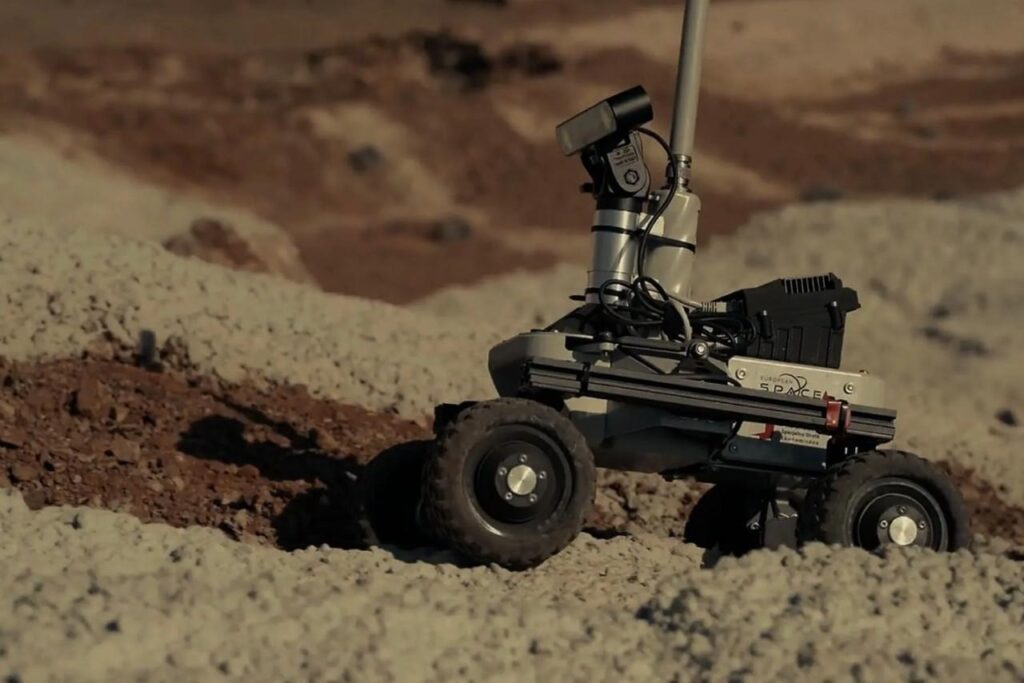
TL;DR: The European mobile robotics company is becoming more visible in field robotics, inspection, research, and dual-use prototyping because Europe combines strong mechatronics, ROS 2 software expertise, and access to demanding industrial and academic users. The gap with established US and Asian UGV manufacturers has not disappeared, but it is narrowing in areas such as modularity, open interfaces, rapid iteration, and standards-driven engineering.
How is the European mobile robotics company changing the UGV landscape?
A European mobile robotics company typically competes less on manufacturing scale and more on engineering flexibility. In practice, that means smaller production runs, faster hardware revisions, and platforms designed to be integrated with customer sensors, autonomy stacks, and mission software. This is particularly visible in the mobile robotics market Europe is building around research labs, industrial pilots, agriculture, inspection, and security applications.
One example is mobile robotics company Fictionlab, the developer of the Leo Rover. In the European robotics companies segment, Fictionlab represents a hardware robotics EU approach built around open architecture, ROS 2 compatibility, and field deployment rather than closed black box systems. That matters when an integrator needs to replace perception sensors, test different compute modules, or adapt a UGV to a specific terrain and payload envelope.
Across the wider UGV manufacturers landscape, US firms often benefit from defense scale and software ecosystems, while Asian vendors often compete on component supply chains and manufacturing depth. European startups are closing part of that gap by focusing on modular robotics platforms, validated subsystems, and how quickly a platform can move from lab testing to operational trials.
Why are European robotics companies gaining technical credibility?
The rise of the European mobile robotics company is tied to Europe’s engineering base. According to the International Federation of Robotics, Europe remains a major region for industrial robotics deployment and robotics R&D, supported by strong automation sectors in countries such as Germany, France, Italy, and the Nordic region. That industrial background feeds into mobile robotics through suppliers, embedded systems talent, safety engineering, and machine vision know-how.
European robotics companies also benefit from a dense network of universities and applied research institutes. ROS and ROS 2 have become standard tools in many labs, which lowers the friction between research code and deployable UGV systems. For robotics startups, this matters because customers increasingly expect a robot base to expose standard interfaces for navigation, teleoperation, sensor fusion, and remote diagnostics.
Another factor is regulation. Europe is often seen as slower because of certification and compliance requirements, but that discipline can improve system design. In hardware robotics EU projects, documentation, traceability, EMC testing, battery transport compliance, and machine safety practices are not side issues. They directly affect whether a robot can be shipped, serviced, and used in real operational settings.
What technical choices help a European mobile robotics company compete?
A European mobile robotics company usually gains ground through architecture, not volume. The most successful technical patterns are visible across many UGV manufacturers.
Several design choices matter repeatedly in the mobile robotics market Europe is shaping:
- Open middleware support – ROS 2 integration allows customers to reuse autonomy packages, logging tools, and simulation workflows.
- Modular payload bays – swappable LiDAR, GNSS, cameras, manipulators, or radios reduce redesign work.
- Serviceable mechanics – field-replaceable wheels, suspension parts, and accessible electronics improve uptime.
- Edge compute flexibility – support for different compute modules helps balance power draw, thermal limits, and AI workloads.
- Telemetry and remote operations – useful for inspection, research expeditions, and low-bandwidth field missions.
What this approach is, in practical terms, is a shift from selling only a vehicle to delivering a robotics development platform. That is one reason some European robotics companies are visible beyond their size. They fit research and integration workflows better than rigid, vertically locked products.
When do robotics startups have an advantage over larger UGV manufacturers?
A European mobile robotics company tends to outperform larger competitors when a project is technically specific and still evolving. This is common among robotics startups, where users need a base platform that can change during testing rather than a finalized mass-market product.
Typical cases include outdoor autonomy research, agricultural data collection, remote sensing, academic competitions, and pre-production inspection systems. In these contexts, how a drivetrain behaves on mixed terrain, how power buses are exposed, or how quickly firmware can be adapted may matter more than brand scale.
The advantage is strongest in situations like the following:
- Custom payload integration with unusual power or mounting requirements
- Rapid iteration of perception stacks using ROS 2
- Pilot deployments where maintenance access is critical
- Projects that need transparent APIs rather than proprietary tooling
- Testing environments where failures must be diagnosed at subsystem level
This does not erase the strengths of established US or Asian UGV manufacturers. It explains how European robotics companies can win technical credibility in narrow but important segments.
How does hardware robotics EU differ from low-cost platform manufacturing?
The European mobile robotics company often works under different constraints from high-volume hardware exporters. Labor costs are higher, but the engineering response is usually better integration quality, documentation, and support for customization. In hardware robotics EU, differentiation often comes from subsystem quality and maintainability rather than the lowest unit price.
For example, suspension geometry, ingress protection, connector choice, and thermal management have a large effect on whether a UGV survives outdoor operations. These are not glamorous features, but they often determine whether a pilot can generate usable field data. In this sense, how a European robotics company differs from a generic platform vendor is that the robot is designed as a testable system, not only as assembled hardware.
This is also where companies such as Fictionlab fit the current European robotics companies narrative. Platforms like the Leo Rover address a recurring need in the mobile robotics market Europe serves: reliable open UGV bases that can be adapted by researchers, integrators, and industrial teams without discarding the underlying platform architecture.
Why does this matter for engineers evaluating European robotics companies?
For an engineer, the relevance of the European mobile robotics company trend is practical. It expands the set of available UGV manufacturers that support open development, field serviceability, and integration with established software tools. The key question is not whether Europe has already surpassed US or Asian competitors. The more useful question is what type of robotics problem a given platform is designed to solve, and how much control the user retains over sensors, software, and maintenance.
In that context, European robotics companies are becoming harder to ignore. Their progress is visible in modular hardware, ROS 2 readiness, and deployment-oriented design. For teams that need an adaptable UGV rather than a sealed appliance, this shift is technically significant. More details about Fictionlab’s approach to open mobile platforms are available on its website.